UIDAI Aadhaar Portal – Login, Download, Update & Check Status
The Aadhaar Card is a 12-digit identification number that serves as a unique identity for residents of India. Managed by the Unique Identification Authority of India (UIDAI), Aadhaar combines personal information with biometric data, making it one of the largest digital identity systems in the world. By December 2025, over 1.43 billion individuals were registered under Aadhaar, using it for identity verification, government services, and financial inclusion.
Established in 2009, UIDAI operates under the Ministry of Electronics and Information Technology (MeitY) with the mandate to enroll residents, issue Aadhaar numbers, and maintain the integrity and security of the system. Through Aadhaar, residents can access a wide range of services, including identity verification, digital transactions, government benefits, and more — all through a secure, easy-to-use platform.
Aadhaar Services
UIDAI offers a comprehensive set of online Aadhaar services that allow residents to manage their Aadhaar details conveniently and securely. Through the official platforms, users can check Aadhaar Card status and perform the following tasks:
Instant e-Aadhaar
Aadhaar Dashboard
UIDAI Website
Create Virtual ID
Edit Aadhaar Info
Aadhaar Status
Recover Aadhaar/EID
Aadhaar PVC Card
PVC Delivery Tracker
Locate Enrollment Center
Schedule Appointment
Verify Aadhaar
Lock/Unlock Aadhaar
What is an Aadhar Card?
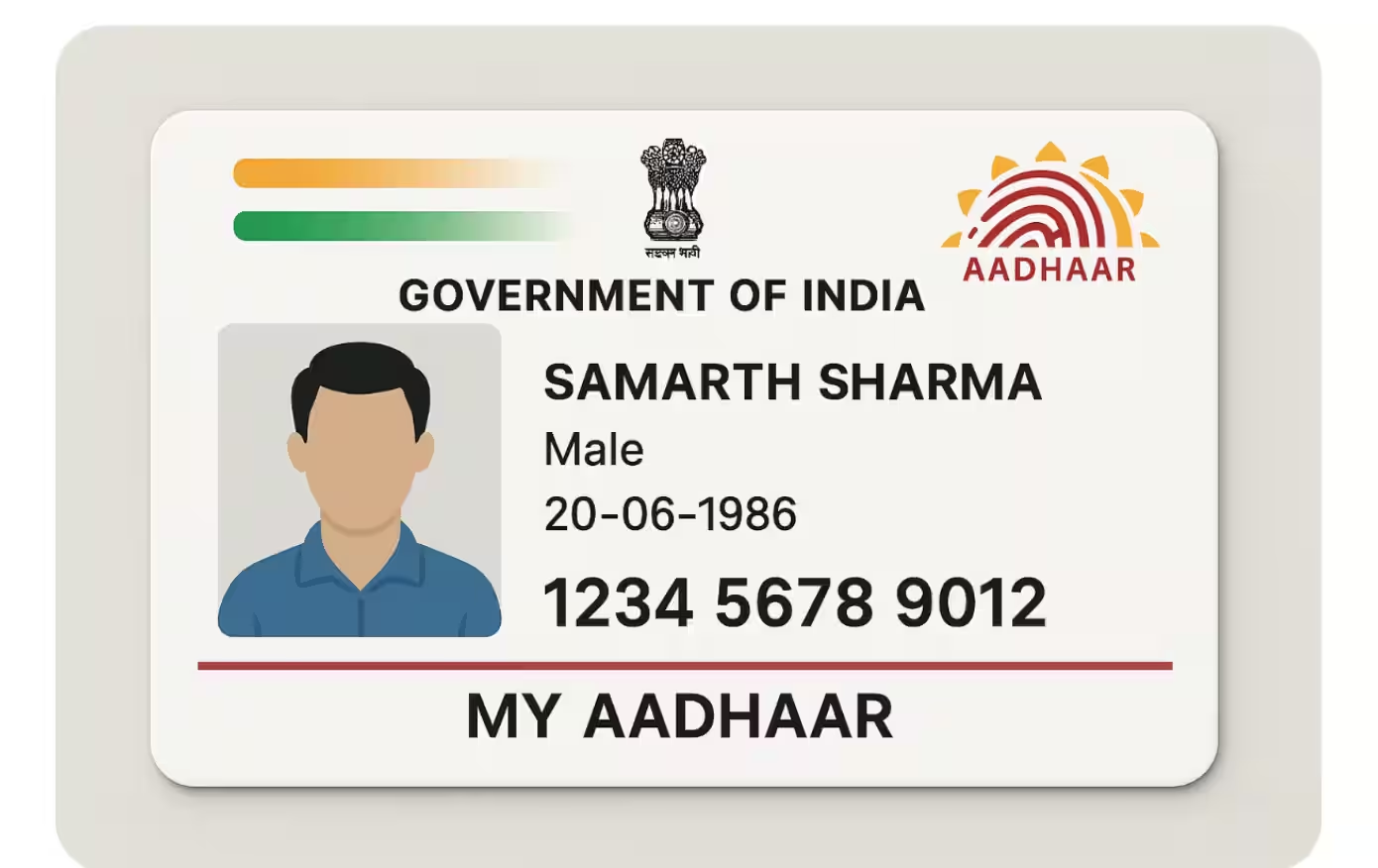
The Aadhaar card is a unique identification document issued by the Unique Identification Authority of India (UIDAI). It serves as a digital proof of identity and address for residents across India. While it is not legally mandatory, Aadhaar is widely used for accessing government services, banking, subsidies, and digital verification.
The Aadhaar card contains:
- A 12-digit unique identification number (UID)
- Biometric information – fingerprints and iris scans
- QR code for verification
- Personal details – Name, Gender, Date of Birth, and Address
While Aadhaar is not mandatory, it is widely used for government services, banking, subsidies, and digital identity verification.
Key Features of Aadhaar
Aadhaar is India’s unique 12-digit identity number, linked to personal and biometric details. It serves as a reliable proof of identity and address, widely accepted across the country for government, banking, and digital services.
- Unique Identity: Every Aadhaar number is unique to an individual, ensuring a distinct identity across India.
- Voluntary but Essential: While Aadhaar is not legally mandatory, it is required for accessing several government and financial services.
- Biometric Authentication: Identity verification is done using fingerprints, iris scans, and a photograph for secure authentication.
- Nationwide Validity: Aadhaar is recognized across India as valid proof of identity and address.
- Digital Access: Residents can download their Aadhaar card online as an e-Aadhaar, making it easy to access anytime, anywhere.
How to Apply for Aadhaar
Getting an Aadhaar card is free and easy. Follow these steps:
- Find an Enrollment Centre – Look for the nearest Aadhaar Seva Kendra on the UIDAI website.
- Book an Appointment – Some centers let you book online to save time.
- Visit the Centre – Take your original documents to prove your identity and address.
- Give Biometric & Personal Details – Provide your name, address, phone number, photo, fingerprints, and iris scan.
- Get Acknowledgment Slip – You will receive a slip with your Enrollment ID (EID) to track your application.
- Wait for Aadhaar – Your 12-digit Aadhaar number will be issued in 2–3 weeks.
- Download e-Aadhaar – You can download your digital Aadhaar online using your EID or Aadhaar number.
Required Documents for Aadhaar
To apply for Aadhaar, you need to provide the following documents:
- Proof of Identity (POI): Passport, PAN Card, Voter ID, Driving License
- Proof of Address (POA): Bank statement, electricity bill, ration card, rental agreement
- Proof of Date of Birth (DOB): Birth certificate, SSLC certificate
My Aadhaar Login
You can securely access and manage your Aadhaar account through the My Aadhaar Portal using your 12-digit Aadhaar number. An OTP (One-Time Password) will be sent to your registered mobile number to ensure secure login.
How to Login:
- Visit the My Aadhaar Portal online.
- Click on the My Aadhaar section to proceed.
- Enter your Aadhaar number or your Virtual ID (VID).
- Enter the OTP received on your registered mobile number.
- Type the CAPTCHA code shown on the screen to verify you are human.
- Now Your Login Process is Complete.
Once Logged In, You Can:
- Check the status of your Aadhaar card or any update requests.
- Download e-Aadhaar instantly for identity verification.
- Update your personal details, such as your address or mobile number.
- Keep track of all Aadhaar-related activities in one secure place.
Logging in to your Aadhaar account makes it easy to access all services safely and conveniently from anywhere, anytime.
Aadhaar UIDAI Services in Detail
Aadhaar provides a wide range of services to help you manage, secure, and use your unique identification safely and conveniently. Each service is designed to make your experience seamless, whether it’s downloading your e-Aadhaar, updating personal details, or accessing services across India.
Download e-Aadhaar
You can download your Aadhaar in PDF format anytime from the official UIDAI website.
Steps to Download e-Aadhaar:
- Go to the UIDAI portal: https://myaadhaar.uidai.gov.in/
- Under the “My Aadhaar” section, select Download Aadhaar.
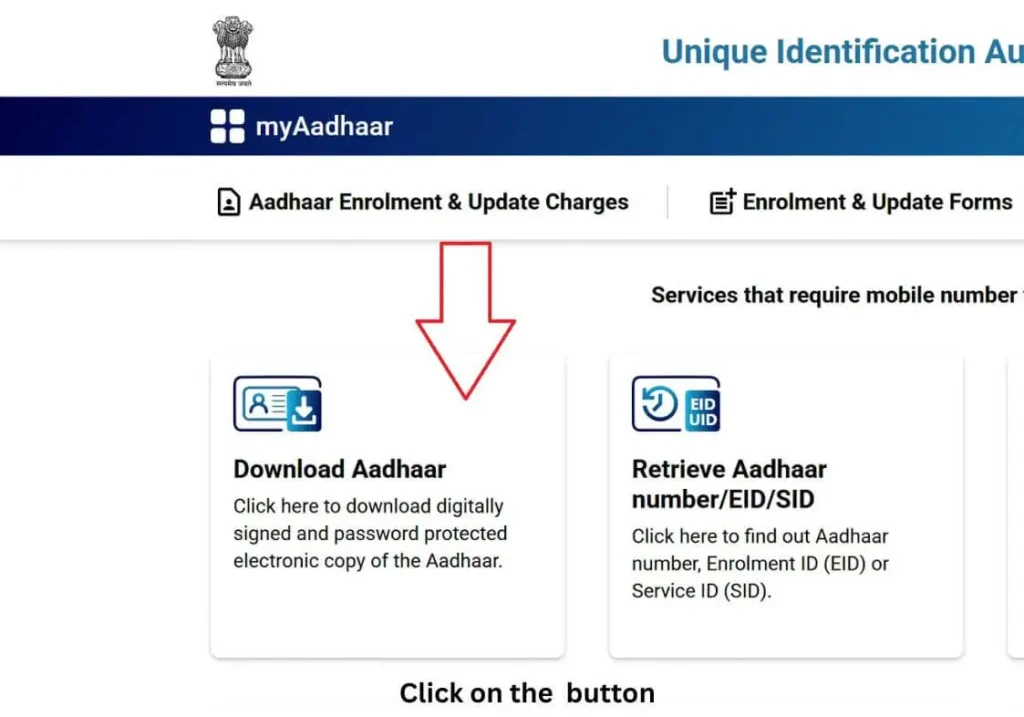
- Enter your 12-digit Aadhaar number, or 16-digit Enrollment ID (EID), or 28-digit Virtual ID (VID).
- Enter the security code (captcha) and click “Send OTP.”
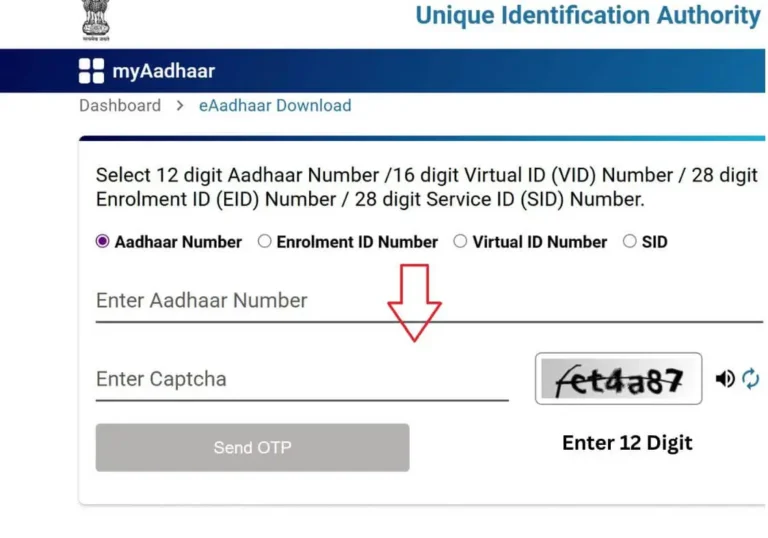
- Enter the OTP received on your registered mobile number.
- Download the PDF file.
Important: The PDF is password-protected. Use the first four letters of your name in CAPITAL letters + birth year as the password.
If you’ve misplaced your Aadhaar number, you can use the “Retrieve EID/Aadhaar Number” option on the portal.
2. Check Enrollment or Update Status
After applying for Aadhaar or updating details, you can track the progress easily.
Steps to Check Status Online:
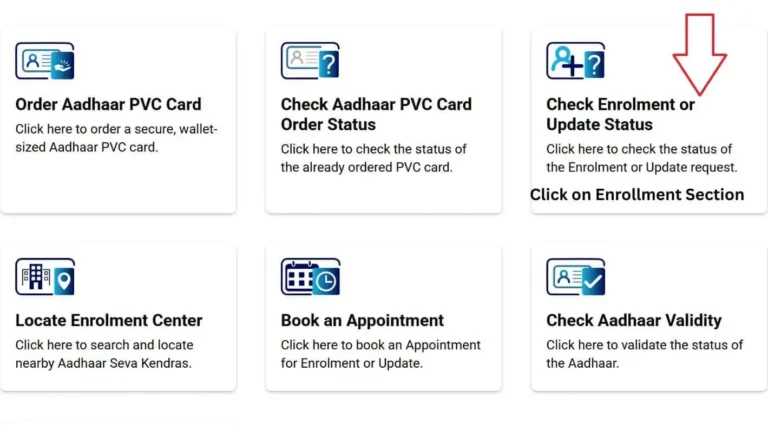
- Enter your Enrollment ID (EID) or Update Request Number (URN).
- Type the captcha code shown on the screen and submit.
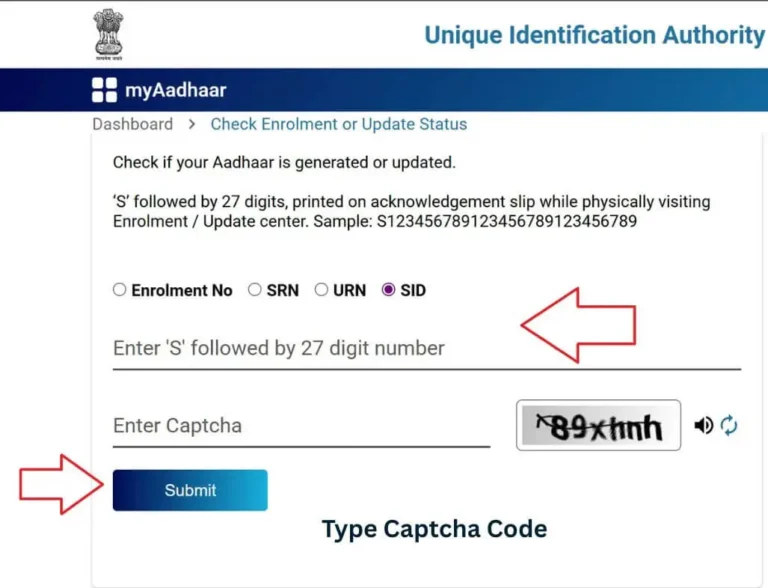
The portal will display your application status:
- Generated: Aadhaar has been created.
- Under Process: Your application or update is still being processed.
You can also check the status via the toll-free number 1947:
- Call 1947 from the mobile number registered with your Aadhaar.
- Choose your preferred language from the options provided.
- Select the service you want to check.
- Enter your Enrollment ID (EID) or Update Request Number (URN) when prompted.
- Follow the voice instructions to hear the status of your Aadhaar application or update.
3. Update Aadhaar Details
You can update personal details like name, address, date of birth, gender, or mobile number online.
Steps to Update Details Online:
- Go to UIDAI portal and click Update Aadhaar Details.
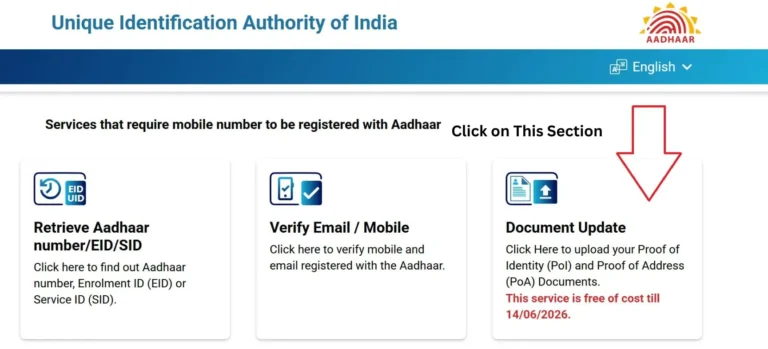
- Enter your 12-digit Aadhaar number and OTP sent to your registered mobile.
- Type the captcha code and select the information you want to update.
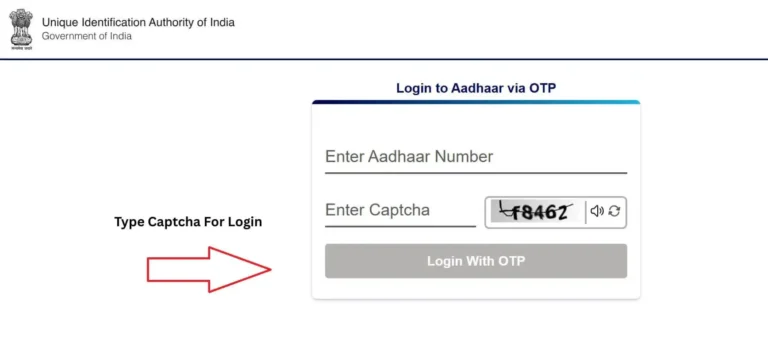
- Upload valid documents such as Proof of Identity (PoI) or Proof of Address (PoA).
- Review and submit your request.
- Note your Update Request Number (URN) to track the progress.
⚠️ Note: Updating details online is free until 14 June 2026.
How to Update Your Mobile Number in Aadhaar
- Visit the nearest Aadhaar enrollment center in your area.
- Share your Aadhaar number and the new mobile number you want to link.
- Complete the biometric verification process to confirm your identity.
- After successful verification, you will receive a confirmation message on your new mobile number, indicating that the update is complete.
4. Retrieve Aadhaar Number or Enrollment ID
If you forget your Aadhaar number or Enrollment ID, you can recover it online:
Steps:
- Visit UIDAI portal and go to Retrieve Aadhaar/EID.
- Enter your full name, registered mobile number, and email address.
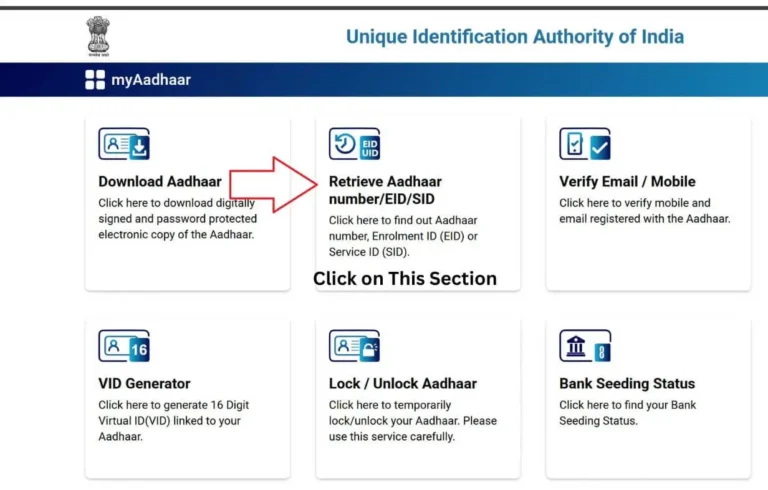
- Choose whether to retrieve Aadhaar Number (UID) or Enrollment ID (EID).
- Enter captcha and request OTP.
- Enter the OTP and submit.
- Your Aadhaar number or EID will be sent to your registered mobile/email.
5. Verify Email or Mobile Number
Make sure your email and mobile number are linked to your Aadhaar for secure OTP-based authentication.
Steps:
- Go to UIDAI portal
- Click On → Verify Email/Mobile.
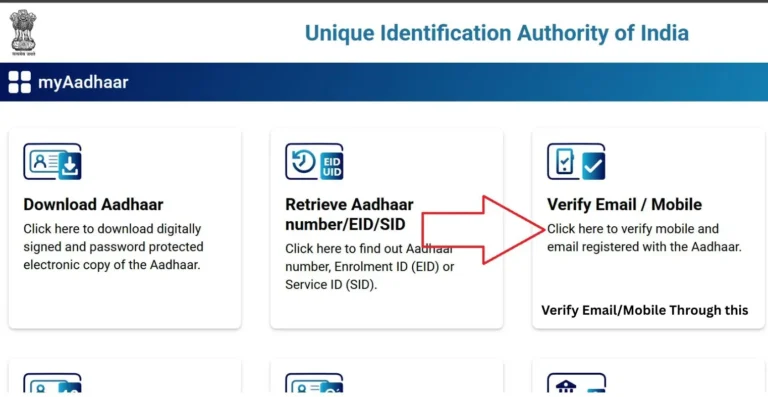
- Enter Aadhaar number and registered email or mobile number.
- Enter captcha and request OTP.
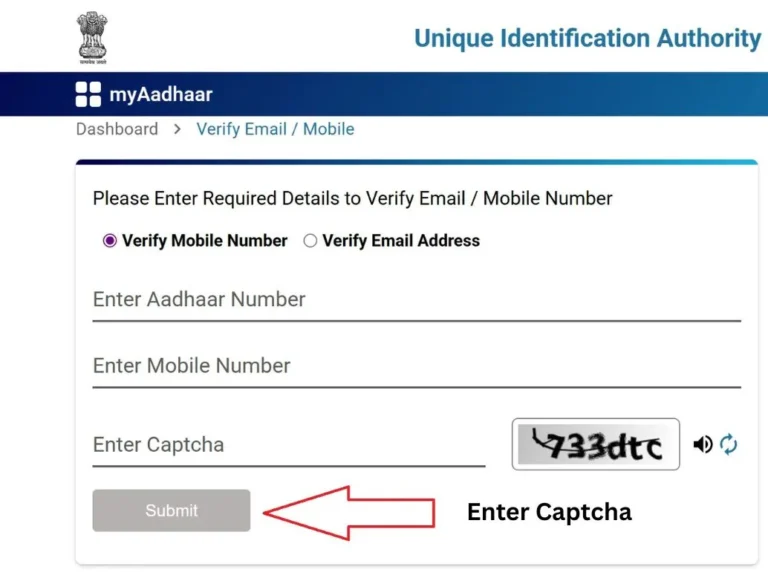
- Submit OTP to complete verification.
- You’ll receive a confirmation message.
6. Generate Virtual ID (VID)
A Virtual ID (VID) is a temporary 16-digit number that you can use instead of your Aadhaar for online verification, protecting your privacy.
Steps to Generate VID:
- Visit UIDAI portal
- Hover Over To VID Generator.
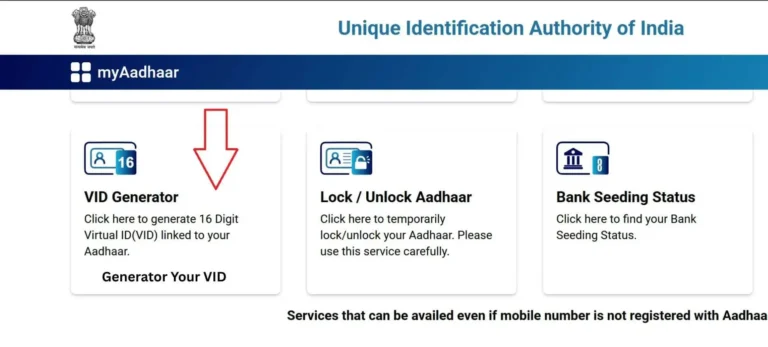
- Enter your Aadhaar number and captcha.
- Request OTP and enter the code received on your registered mobile.
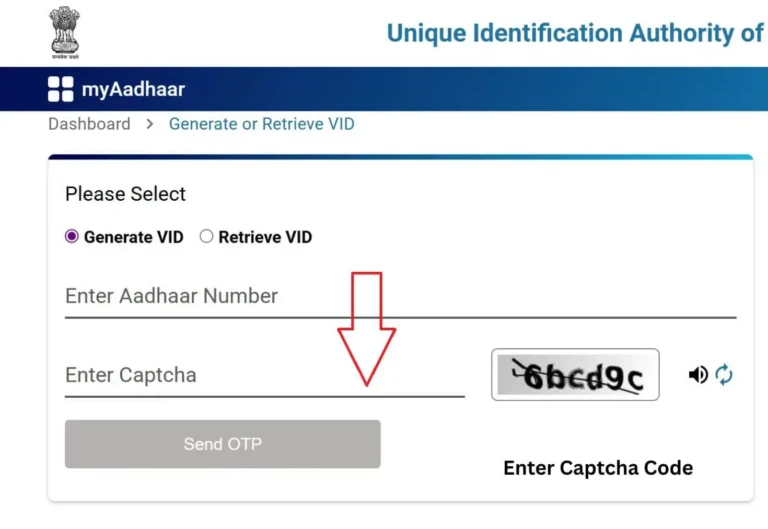
- Choose to Generate New VID or retrieve existing VID.
- Your new VID will be sent via SMS.
Important Points About Virtual ID (VID)
- A Virtual ID (VID) can be used as a substitute for your Aadhaar number for most authentication and verification services.
- You have the flexibility to generate a new VID at any time through the UIDAI portal.
- When a new VID is generated, the previous VID is automatically deactivated, ensuring only one active VID at a time.
- Using a VID helps protect your Aadhaar number from unnecessary exposure, enhancing privacy and security.
7. Order Aadhaar PVC Card
A PVC Aadhaar Card is a durable, wallet-sized card that looks modern and fits easily in your wallet.
Steps to Order PVC Card:
- Go to UIDAI portal
- Find and Click on Order Aadhaar PVC Card.
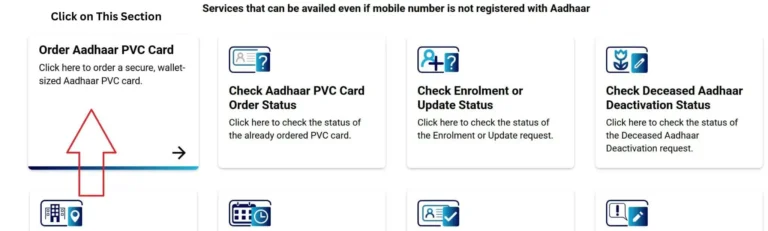
- Enter Aadhaar number or Enrollment ID, captcha, and OTP.
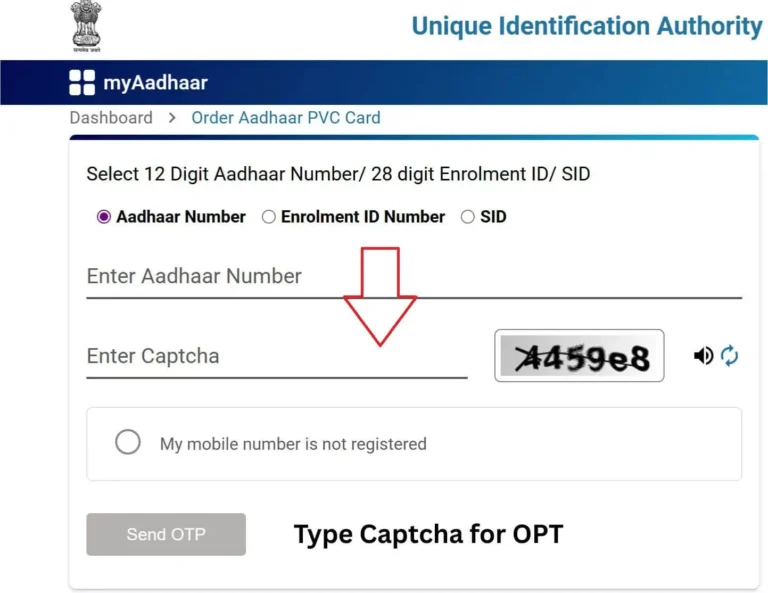
- Review your Aadhaar details on screen.
- Pay ₹50 (including GST and speed post charges) via debit/credit card, UPI, or net banking.
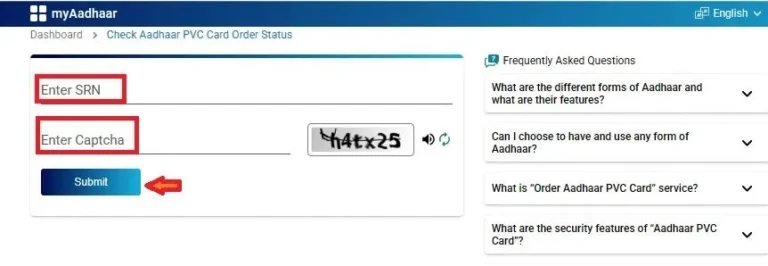
- After payment, you’ll get a Service Request Number (SRN) to track delivery.
Tracking PVC Card:
- Use your Service Request Number (SRN) on the UIDAI portal to track the status of your Aadhaar PVC card.
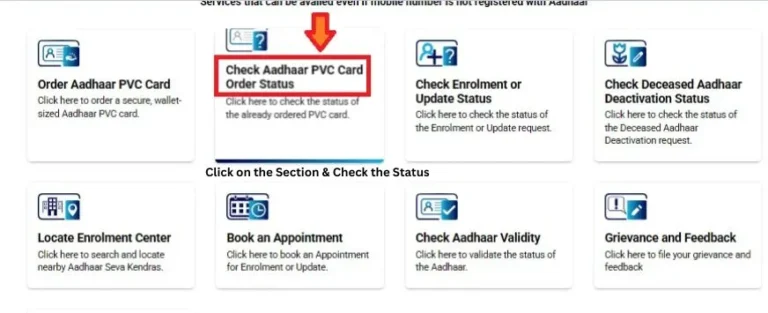
Status Information You Will See
- Under Process – Your PVC card request is being processed.
- Printed – The card has been printed and is ready for dispatch.
- Dispatched – The card has been sent for delivery.
- Delivery usually takes 5 to 10 working days, depending on your location and local postal services.
- Keep your SRN safe and confidential until the Aadhaar PVC card is successfully delivered to you.
Important Points to Remember
- Keep your SRN confidential and do not share it with anyone.
- Delivery usually takes 5 to 10 working days, depending on your location and postal service availability.
- Retain the SRN until you receive your Aadhaar PVC card safely.
8. Locate Enrolment Centers & Book Appointments
To enroll, update details, or complete biometric verification, you can find Aadhaar Seva Kendras or permanent enrollment centers.
Steps to Locate Centers:
- Visit the UIDAI portal and select the Locate Enrollment Center option.
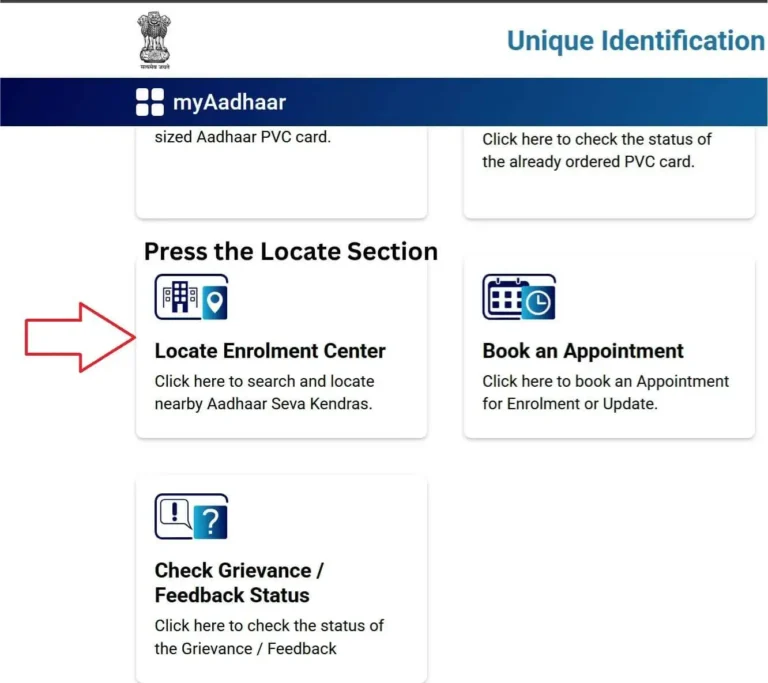
- Search for an Aadhaar enrollment or update center using State and District, PIN Code, or Center Name.
- View complete details such as the center address, contact information, and working hours.
- You can also book an appointment online in advance to avoid long queues and save time.
An Overview of Aadhaar and UIDAI Services
Aadhaar is a 12-digit unique identification number issued to residents of India by the Unique Identification Authority of India (UIDAI). It is designed to provide every individual with a single, verifiable identity based on both personal and biometric information.
An Aadhaar record includes demographic details such as name, gender, date of birth, address, mobile number, and email ID, along with biometric data like fingerprints, iris scans, and a facial photograph. This combination ensures that each Aadhaar number is truly unique, eliminating duplication and identity fraud.
Aadhaar enrollment is free of cost and available to all Indian residents. It can also be obtained by Non-Resident Indians (NRIs) and foreign nationals who have lived in India for at least 182 days in the previous 12 months.
Although Aadhaar is not mandatory, it is widely used for government schemes, banking services, subsidies, and digital identity verification across India.
Major Features of the Aadhaar Card
- Unique Identity Assurance
Aadhaar uses advanced biometric technology to ensure that one individual receives only one Aadhaar number, preventing duplicate or fake identities. - e-Aadhaar (Digital Aadhaar)
e-Aadhaar is a digitally signed PDF version of the Aadhaar card that can be downloaded online. It is password-protected and is legally valid under the Aadhaar Act, 2016. - Masked Aadhaar for Privacy
Masked Aadhaar displays only the last four digits of the Aadhaar number (e.g., XXXX-XXXX-1234), making it safer to share while protecting sensitive information. - Baal Aadhaar for Children
Baal Aadhaar is issued to children below 5 years of age. It includes only the child’s photograph and is linked to the parent’s Aadhaar. Biometric details are collected later as the child grows. - Aadhaar PVC Card
A durable, wallet-sized plastic card that is easy to carry and long-lasting. It can be ordered online for ₹50 (including GST and speed post) and typically delivered within a few working days. - Virtual ID (VID)
A 16-digit temporary number that can be used instead of the Aadhaar number for authentication. VID enhances security by allowing users to share Aadhaar details without exposing the actual number. - Not Proof of Citizenship
Aadhaar serves only as proof of identity and address, not as proof of Indian citizenship. This has been clearly stated by UIDAI and upheld by the Supreme Court of India.
Key Uses of Aadhaar
Aadhaar is more than just a 12-digit identification number—it has become an essential tool for accessing a wide range of services in India. Its applications simplify processes, enhance security, and ensure that benefits reach the intended recipients.
Financial Inclusion:
Aadhaar enables quick and hassle-free Know Your Customer (KYC) verification, which is required for opening bank accounts, investing in mutual funds, and obtaining insurance. By linking Aadhaar to financial services, residents can access banking and investment products easily, even in remote areas, fostering financial inclusion across the country.
Direct Benefit Transfer (DBT):
Aadhaar is the backbone of many government welfare programs. Schemes like LPG subsidy, PM-KISAN, and other social security programs transfer funds or benefits directly to the beneficiary’s Aadhaar-linked bank account. This ensures transparent, timely, and fraud-free delivery of government subsidies and financial aid.
Digital Services:
Aadhaar integrates seamlessly with digital platforms, including the Aadhaar-enabled Payment System (AePS), Unified Payments Interface (UPI), and e-Governance services. This allows residents to perform secure transactions, pay bills, and access government services online, reducing dependency on cash and physical documentation.
Identity Verification:
Aadhaar serves as a proof of identity and address for a variety of official purposes. It is widely used for:
- Activating mobile SIM cards
- Passport and visa applications
- School and college admissions
- Examinations and certifications
By providing a unique and verifiable identity, Aadhaar helps institutions verify residents efficiently while minimizing errors and fraud.
About UIDAI
The Unique Identification Authority of India (UIDAI) is the government agency responsible for managing the Aadhaar program.
- Establishment: UIDAI was officially created under the Aadhaar Act, 2016, although the project began on 12 July 2009.
- Governance: It operates under the Ministry of Electronics and Information Technology (MeitY).
- Role: UIDAI handles the creation, updating, and management of Aadhaar for all residents of India.
Main Responsibilities of UIDAI
The Unique Identification Authority of India (UIDAI) is entrusted with the task of implementing and managing the Aadhaar program across the country. Its work goes beyond simply issuing Aadhaar numbers—it ensures the security, accuracy, and accessibility of identity data, while enabling seamless integration with various government and digital services. UIDAI plays a key role in making governance more transparent, efficient, and citizen-friendly.
Key Responsibilities of UIDAI:
- Issuance of Aadhaar: Assigns unique 12-digit Aadhaar numbers to residents based on their biometric and demographic information, establishing a reliable identity system.
- Data Management and Security: Maintains the privacy and security of Aadhaar data, implementing robust measures to prevent misuse or unauthorized access.
- Updating and Maintenance: Enables residents to update personal details such as address, mobile number, or biometric information, ensuring records remain accurate and up-to-date.
- Authentication Services: Provides authentication mechanisms that allow government agencies, banks, and private entities to verify identities securely using Aadhaar.
- Integration with Government and Digital Services: Facilitates the use of Aadhaar across financial systems, welfare programs, digital payments, and e-governance platforms, improving efficiency and reducing fraud.
- Compliance and Policy Implementation: Ensures all Aadhaar-related activities adhere to the Aadhaar Act, 2016, while continuously refining policies and technologies to meet evolving security and service standards.
UIDAI – The Authority
The Unique Identification Authority of India (UIDAI) is the government body responsible for managing the Aadhaar program and ensuring the security of residents’ personal and biometric data. It oversees enrollment, issuance, and maintenance of Aadhaar numbers across the country.
Key Details:
- Established: 2009, under the Ministry of Electronics and Information Technology (MeitY)
- Head Office: New Delhi, with regional offices in Bengaluru, Mumbai, Hyderabad, and other major cities
- Helpline: 1947 (supports multiple languages)
- Email: elp@uidai.gov.in
UIDAI plays a central role in facilitating digital identity verification, linking Aadhaar to various services, and ensuring that residents can securely access government and financial services.
FAQS
Summary
The Aadhaar Card has become an indispensable part of daily life in India, transforming how residents interact with both government and private services. Beyond being just a 12-digit number, Aadhaar serves as a trusted and universally accepted proof of identity and address, making it easier for citizens to access a wide range of essential services.
With Aadhaar, individuals can open bank accounts, invest in financial products, obtain insurance, and access government welfare schemes with minimal paperwork. Direct Benefit Transfers (DBT) linked to Aadhaar ensure that subsidies, pensions, and other benefits reach the intended recipients efficiently and transparently, reducing the risk of delays or fraud.
In the digital realm, Aadhaar powers secure online transactions, e-governance services, and payment platforms like AePS and UPI, enabling citizens to interact with government portals, pay bills, and complete financial transactions conveniently from anywhere. Its integration across multiple sectors has streamlined administrative processes, saving time and resources for both citizens and institutions.
Security and privacy are central to Aadhaar’s design. UIDAI implements strict measures to protect residents’ personal and biometric data, ensuring that identity verification is not only convenient but also safe and reliable. This trust in the system has made Aadhaar a cornerstone for digital India initiatives, fostering financial inclusion, transparency, and efficiency on a national scale.
In essence, Aadhaar is no longer just a document—it is a gateway to modern India’s services, empowering millions of residents by providing a secure, verifiable, and universally recognized identity. Its continued adoption and integration will play a critical role in shaping India’s digital future, making government and financial services accessible to every citizen.